





NaijaGists.com Latest News Updates
US Air Strikes On ISIS Terrorists Camps in Nigeria: Latest Updates — and What May Happen Next

US Air Strikes on ISIS Terrorists Camps in Nigeria: Latest Updates — and What May Happen Next
The headline sounds like something from an action movie, but this one is real life — and it has already changed the conversation around Nigeria’s security.
Because let’s be honest: when Nigerians woke up to reports that the United States carried out strikes on ISIS-linked targets inside Nigeria, many people had the same reaction:
“Wait… the US is now bombing targets in Nigeria? How did we get here?”
What we know so far (with dates, not vibes)
1) The strikes happened around Christmas (Dec 25–26, 2025).
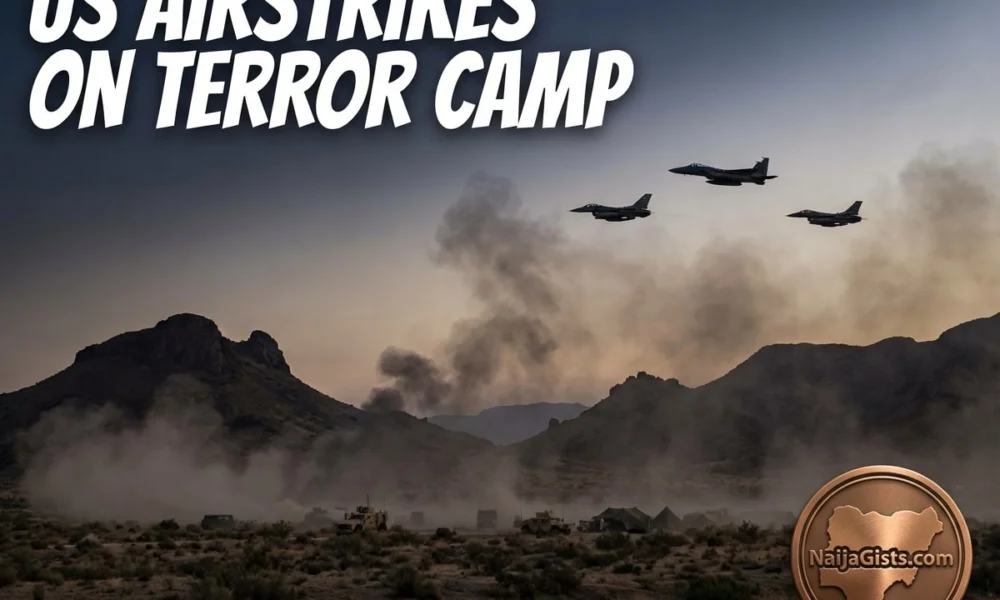
U.S. Africa Command (AFRICOM) said it conducted strikes on Dec. 25, 2025, in Sokoto State, “in coordination with Nigerian authorities,” with an initial assessment that multiple ISIS terrorists were killed.

2) Nigeria says the targets were ISIS-linked camps in Sokoto (Bauni forest area).
Reuters reported that Nigeria described the operation as U.S.-backed, hitting two ISIS-linked camps in the Bauni forest of Sokoto State, with the Nigerian government saying it was meant to disrupt militants and foreign fighters infiltrating from the Sahel.
3) The operation was coordinated at the highest level.
Reuters reported Nigeria said the strikes were authorised by President Bola Tinubu, and that U.S. President Donald Trump said it was done at Nigeria’s request.
4) The “why” is being debated (hard).
Trump framed it publicly in a religious angle (talking about revenge for attacks on Christians), but Nigerian officials — and several analysts — have pushed back that extremist violence in Nigeria affects multiple communities and shouldn’t be reduced to one narrative.
5) Some details are still contested/unclear.
Sky News quoted a presidential adviser saying details on who was actually hit were “sketchy,” which is basically diplomatic language for: “We need clearer verification.”
So yes — strikes happened. Yes — official statements exist. But also yes — the fog of counter-terror operations is real, and Nigeria must verify outcomes beyond headlines.
Why this is a big deal for Nigeria (even beyond the airstrikes)
This is not just “America helped us.” It signals a possible shift in how Nigeria and the U.S. want to run counter-terror cooperation.
AFRICOM’s wording matters: “in coordination with Nigerian authorities” and “initial assessment.” That’s typical of operations where intelligence-sharing + targeting support becomes deeper than before.

And Reuters added something Nigerians should not ignore: Nigeria’s foreign minister suggested further strikes may be possible.
Meaning: this may not be “one and done.”
The risk side Nigerians are already raising (and it’s not paranoia)
Not everybody is celebrating.
One Al Jazeera opinion piece argues U.S. airstrikes won’t fix Nigeria’s wider security crisis and could even worsen tensions, especially if communities interpret it through a political or religious lens rather than a strictly counter-terror lens.
And that’s a fair fear, because in Nigeria, perception can become gasoline.
If people begin to believe the strikes are:
selective, or
politically motivated, or
religiously framed,
then extremists can exploit that to recruit, retaliate, and polarise communities.
Predictions: What may happen next (realistic, not sensational)
1) A second wave of “targeted operations” (likely)
If Nigeria and the U.S. believe the first strike delivered results, the next logical step is more strikes on high-value camps, but only if:
intelligence is strong,
civilian-risk is low,
and Nigeria formally requests/approves.
Reuters already hinted this door is open.
2) Propaganda and revenge threats from extremist networks (very likely)
When extremist camps are hit, they often respond in two ways:
revenge attacks (to prove they’re not weak), and/or
media propaganda (to spin the story into recruitment).
This doesn’t mean Nigerians should panic — it means security agencies will likely raise alerts and intensify surveillance, especially around vulnerable targets.
What to watch: Government security advisories, unusual threats on extremist channels, and local community warnings.
3) A big information war inside Nigeria (already starting)
This is the part that can quietly damage Nigeria more than bombs:
“Who exactly was hit?”
“Was it ISIS, bandits, or somebody else?”
“Why Sokoto?”
“Why now?”
“Are we outsourcing security?”
Sky’s “sketchy details” comment is a sign that even insiders want clarity.
What to watch: Conflicting statements, viral claims without evidence, and political actors hijacking the narrative.
4) Domestic pressure for Nigeria to show proof and accountability (likely)
After a high-profile strike, Nigerians will demand:
proof of who was killed,
independent confirmation,
and clarity on civilian harm (even if officials say none).
Reuters reported Nigeria said there were no civilian casualties, though debris reportedly reached some towns — that alone will keep questions alive.
What to watch: Local reports from affected communities, human rights monitoring, and official damage assessments.
5) Regional ripple effects (medium likelihood, but important)
Nigeria’s northwest and the Sahel have become more interconnected — fighters, weapons, and networks move across borders. Reuters noted concerns about foreign fighters infiltrating from the Sahel.
If the U.S. becomes more active in Nigeria, Sahel-based networks may shift routes, push fighters into new corridors, or trigger counter-movements.
What to watch: Security statements from Niger/Benin, ECOWAS reaction, and regional military coordination.
The most realistic outcome
Here’s the blunt truth:
Air strikes can disrupt camps. They can remove leaders. They can buy time.
But they do not automatically solve:
poverty and local grievances extremists exploit,
corruption inside security pipelines,
community distrust,
and weak justice systems that allow arrested criminals to return.
That’s why this moment is a crossroads:
Nigeria can use this strike as a starting gun for deeper reforms — or it becomes another headline that fades while insecurity evolves into a new shape.
If these strikes truly hit ISIS-linked camps, then it’s a tactical win.
But tactically winning and strategically winning are not the same thing.
The next chapter will be decided by three things:
verification (who was actually hit),
follow-up security operations (not only airstrikes), and
government credibility (how transparent and consistent Nigeria is afterward).